Showing posts with label democracy. Show all posts

Sunday, June 8, 2014

The Double Coup of 1952

Coup. 2 a sudden, successful move or action 3 coup d'etat
— Webster's New World Dictionary, Third College Edition

1952 was a relatively calm year in the USA. The postwar prosperity was just 7 years old, as most other nations had not yet been able to rebuild their bombed-out factories enough to make a dent in U.S. global economic dominance. The Korean War had settled down, for the most part, even if an armistice had not been signed. China's communist party was well-entrenched, so that only right-wing crazies any longer believed Chiang Kai-shek could ever return to the mainland. Jazz was still hot, and so was Frank Sinatra; rock and roll had not quite been born yet.

It was an election year, and as usual a number of men (it was before women aspired to be nominees of the two main political parties) wanted to be President.

There were primaries held in many states in 1952, but many state parties still chose the party delegations to the national conventions by other methods. These typically amounted to appointments by party bosses.

The two main contenders in the Republican Party were Senator Robert Taft and General Dwight David Eisenhower, most recently the Commander of NATO. Eisenhower, at least at first, did not so much run for the office as allow others to create a campaign using his name. Outgoing President Truman had once asked him to run as a Democrat. But "Not only had Eisenhower no politics; he had no religion, no conspicuous guiding principles, and few known views on most of the great issues of his time." But, it turned out, he was a Republican. [Manchester, The Glory and the Dream, p. 745]
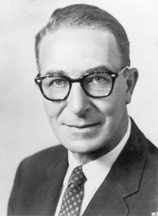

Senator Estes Kefauver

President Truman was eligible for another term (his first term as President came from the death of Franklin D. Roosevelt), and he was on the primary ballots, but he was low in the polls. Estes Kefauver, Senator from Tennessee, was the front runner. He had led an investigation into organized crime and its control of political machines, which turned out to be mostly Democratic Party political machines. He vowed to clean up America.

Truman could not let that happen. While most historians have been unable to prove that Truman was personally corrupt, it is hard to argue with his lifetime tendency to run with corrupt men, starting with the Pendergast Machine in his native Missouri, and ending with men he appointed to high office when the President's appointed cronies, among them Donald Dawson, Merle Young, and William Boyle Jr., were caught demanding bribes to facilitate government grants to businesses. Truman did not think Kefauver was cleaning up the Democratic Party, he thought Kefauver was destroying it.

Truman needed a white knight, someone with a good reputation, but who would let the Democrats continue corruption as usual. After considerable effort he convinced the Governor of Illinois, Adlai E. Stevenson, to run against Kefauver.

Stevenson's run may have been the model for Barack Obama's primary run in 2008. Adlai was articulate, a great speaker who could galvanize the Democrats' liberals and intellectuals. Meanwhile the party bosses, hand in hand with organized crime, were happy to get behind Stevenson, who was a true son of the Chicago political machine, no matter his surface gloss.

In the first primary, New Hampshire, Kefauver crushed Truman; Stevenson was not on the ballot. Eisenhower beat Taft 44,497 to 35,820, which is also a large margin of victory.

But Taft was not so easily put off. His father, William Howard Taft, had served both as President and as Chief Justice of the United States Supreme Court. Robert had first been elected to office in 1920 and had served in the U.S. Senate since 1939. He had led the conservative opposition to Roosevelt and Truman for almost two decades. He had a strong campaign organization left over from two prior runs for the nomination.

Robert Taft beat Eisenhower in the next Republican primary, Nebraska; then in Wisconsin. In Illinois Eisenhower came in third. But "Ike" won the New Jersey and Pennsylvania primaries. Earl Warren won California and Taft won South Dakota, the last 2 primaries. With delegates from states not holding primaries Taft was way ahead. He had 588 committed delegates, with only 604 needed to get the nomination. He just needed 16 more uncommitted delegates to win.

Meanwhile Kefauver won every state Democratic primary except Minnesota (won by Hubert Humphrey), Florida (Richard Russell) and West Virginia (which elected an unpledged delegation).

So who was elected President in 1952? Did the people elect Estes Kefauver or Robert Taft?

Trick question. Don't feel bad, few Americans can name all the Presidents. There were a lot of them, and many are now quite obscure.

There were two political coups in 1952, one in the Democratic Party and one in the Republican Party.

Back in 1952 African-Americans could not vote in the former Confederate states, the South (and were discouraged from voting in many other states as well). The Democratic Party, in the South, was the party of segregation, a white-people's party. There were few Republicans in the southern states, but they sent delegates to the Republican National Convention, convened on July 7 in Chicago, anyway. Keynotes were given by Joe McCarthy and General Douglas MacArthur. Then business was conducted.

Taft appeared to be able to win the nomination on the first ballot. He now had 607 committed delegates. But Thomas Dewey and other supporters of Eisenhower had other ideas. They challenged the credentials of the southern state delegates, most of whom supported Taft. Meanwhile polls showed Eisenhower would do better with the general public than Taft, the darling of conservatives. Back room deals were made in secret. Individual delegates began to desert Taft.

On the first ballot Eisenhower got 595 votes, Taft 500, Warren 81, Harold Stassen 20, and MacArthur 10. Before a second ballot could be held, the Minnesota delegation changed over to Ike, giving him the nomination. Taft, ever the team player, allowed a motion to make the nomination unanimous.

The Democrats also met in Chicago, about a week after the Republicans left. Adlai Stevenson had taken himself out of the race on April 16. Kefauver had the popularly elected delegates, but crooks ran the party in that era. The anybody-but-a-reformer crowd considered Vice President Alben Barkley, but labor union leaders refused to back him. Stevenson made a speech welcoming the convention, and by all accounts, it was a great speech, recapitulating the achievements of the New Deal. Soon after Stevenson allowed he would accept the nomination, if offered.

It took three ballots for organized crime to prevent Estes Kefauver from becoming President. Kefauver led Stevenson in the first ballot with 340 votes to Stevenson's 273, Richard Russell's 268, Averall Harriman's 123 and 1/2, and a scattering for others. In the second ballot Kefauver again led with 362.5 votes, Stevenson had 324.5, Russell 294, and Harriman 121. But on the third ballot some delegates (probably bribed) defected from Kefauver, and Harriman's switched to Stevenson in a block. So Stevenson was nominated on the third ballot with 617.5 votes, or 50.2% of the delegates.

The party bosses did let the American people (excepting southrern non-whites) vote in November of 1952. The American people went with the General, who was pretty close to the center of the political spectrum. To appease the right wing of the Republican Party, Richard Nixon was Ike's running mate and became the Vice President of the United States. Dwight David Eisenhower became the first Republican Party President of the United States since Herbert Hoover.

Sunday, July 7, 2013

Jefferson's Nails, Morsi's Mishap, and Democracy Dilemmas

Thomas Jefferson famously penned the Declaration of Independence and went on to become Governor of Virginia, U.S. Ambassador to France, and eventually the third President of the United States. The Declaration had some very fine words borrowed from republican, Enlightenment thinking and writings of Britain. The guys who supervised Jefferson and approved it were politicians interested in increasing their own economic and political power, which was being cramped by the elite of the British Empire.

Thomas Jefferson may have been brilliant compared to his peers, but he had many faults and weaknesses. A lot of trouble came from his spendthrift ways. He was born to a fairly prosperous slave plantation owner and can be fairly said to be the founder of the shop-till-you-drop American tradition. He constantly bought expensive horses and wines, scientific gadgets and uber expensive clothing. Later there would be the never-ending construction and reconstruction of MacMansion Monticello.

To pay for all this Jefferson owned roughly 200 slaves (they multiplied over time, but he occasionally sold some off to make ends meet). The British tried to free all American slaves during the Revolution, not just as a war measure but because that was the law of Britain (no slavery can exist on British soil, as had been recently confirmed in the Somerset case). The success of the Revolution confirmed Jefferson and other slaveholders in their human property. While Vice-president (under John Adams), Jefferson attempted to wring more profit from his slaves by setting up a nail factory. Adult slaves were needed to grow tobacco, so the children were employed cutting iron rod and shaping it into nails.

We tend to idealize Democracy, but sometimes a more cynical view gets us closer to the truth. Democracy could just be the best way for certain people to get what they want. Democracies may not be quite so different from dictatorships (or monarchies) as we Americans like to think.

Consider the very recent military/judicial coup against the elected leader of Egypt, Mohamed Morsi. President Morsi does not represent my views. I would like to see a secular, modern Egypt, relatively free of religious nonsense. Morsi is a leader of the Islamic Brotherhood, a puritanical reform group. It is fair to say that Morsi only did what many American Presidents have done: he interpreted winning an election as meaning he could implement his party's agenda and ignore other parties. He was wrong. He should have imitated George Washington. He should have been more moderate and inclusive. His job (from a Democracy theory viewpoint) was to make democracy work, to insure it would work in the future.

But Morsi had a lot of pressure from below, from his own followers. They had never held power, and their views had been dissed by others for decades. He chose to satisfy his base.

The real problem was not with Morsi, but with my fellow secular democrats. They lacked patience. They should have let Morsi rule until the next election, and griped the whole time. They would likely have won the next election. Then they could have tried to fix an overpopulated, undercapitalized nation themselves.

People often want democracy until it does not get them what they want. American foreign policy history is littered with examples. American Presidents have almost always favored only pro-American democracies. Anti-American democracies got the cold shoulder, or financing for opposition (but pro-American) parties, or a CIA-managed coup.

Now it is likely that if the Islamic Brotherhood makes a comeback, they will abandon democracy. Why shouldn't they? At this point bloody revolution looks like a better option, if they can pull it off. Even if they re-establish a democracy in the sense of allowing for elections, at the very least they would be idiots if they did not try to execute the coup leaders.

Back in Jefferson's United States, democracy is under control. All men and women may be created with equal rights, but they start life with such vastly different amounts of wealth that we might as well be governed by an aristocracy. Social mobility has sunk to the lowest level since the founding of this Republic. There are plenty of bright ideas around for improving the situation, but the Aristocracy makes sure such ideas never get off the ground.

Imperialism made most Americans comfortable for several decades after World War II. The Great Recession and our astonishing current national debt (which will balloon further as interest rates rise) should have inspired reforms, but almost the only thing that got patched up was the banking system. We aren't broke yet. We'll think about fixing things if we ever reach that point.

At which point worrying about who would make America's best puppet in Egypt won't seem very important.

Agree? Disagree? You can comment on this post at Natural Liberation Blog at blogger.com

Wednesday, December 19, 2012

Second Amendment Needs Amending

When the first ten amendments, or Bill of Rights, was added to the U.S. Constitution in 1791, there were more slaves in the United States of America than there were white male voters (most states required men to own a substantial amount of property to qualify for the franchise).

The Second (II) Amendment stated: "A well regulated Militia, being necessary to the security of the State, the right of the people to keep and bear Arms shall not be infringed."

In 1791 arms were all muzzle-loaded. Pistols, rifles, and cannon required a lengthy procedure to reload and fire. Troops often fired by thirds, so that two-thirds could be reloading and preparing to fire at any one time. Massacres were a team effort: a single man could not reload fast enough to overcome a determined group of defenders.

Much has been made over the centuries of the combining of the phrase about militia with the strong phrase "the right of the people to keep and bear Arms shall not be infringed." Remembering the Revolutionary War, men who emphasized the importance of freedom and democracy worried that a central government controlling centrally-stored militia weapons might more easily establish a tyranny. If citizens held their own weapons, they would be better able to respond to an attempt to establish a monarchy or other dictatorship. A militia itself might be used to establish a dictatorship, as had happened with Cromwell in England only a bit over a century before our own revolution.

I believe "the right of the people to keep and bear Arms," was about personal protection and economic security, not just trying to ensure a republican form of government. A muzzle-loading firearm was a family treasure, especially in rural and frontier areas.

Times have changed. Every adult citizen has had the right to vote since the mid 1960s. We have 220 years of continuous operation of our democratic-republic. It has been 150 years since our only full-scale Civil War. The 4 million inhabitants of 1790 have become 330 million. Guns and rifles are mass produced in factories and even semi-automatic weapons can fire many rounds in a single minute. Automatic weapons can mow down crowds in less than a minute.

We need to ask ourselves, what do we really need out of the 2nd Amendment? And we need to write a new one.

I don't buy the hunting argument against gun control. While a tiny minority of Americans still hunt for food, most hunting is a sport. A game, in which any food production is secondary. I see no reason that hunters should not go back to muzzle-loading rifles and even bows and arrows. I don't see how blasting a squirrel, deer, or wolf with a semi-automatic weapon is much sport. Load your muzzle, tramp throught the wild, try aiming instead of pointing, and if you miss your shot, you have an opportunity to do more hiking.

The same for target practice. Shoot once and reload should be fine.

People have a right to self-defense, but even if you carry a concealed semi-automatic weapon someone can put a bullet in your head before you can pull it out. With semi-automatic weapons eliminated, each of us has a far better chance of surviving an attack. Carrying a one-shot pistol should be adequate for almost all self-defense needs. Having a well-trained, effective police force is a better idea.

That leaves the police, the National Guard, and the federal military forces. They will have modern weapons. That means they will be in a position to abuse their power. But the real power to oppose corrupt police has never been in shooting back. It has always been political. Corrupt police cannot exist without corrupt politicians.

When we say "the security of the State" we mean not just its physical security, but that the government functions in the interest of the people. Preserving the rights of minorities while promoting the general welfare no longer relies on winning a revolutionary war or a civil war. Citizen participation in government is the key to good governance in our modern world.

My candidate for a replacement for the Second Amendment is simple: "The right of the people to self-defense shall not be infringed. The right of the people to democratic control of police, militia, and other armed forces shall not be infringed."

Conservatives, who are more likely to be pro-gun than Moderns, in many other cases have argued for the Original Constitution. They argue that the powers of government should be limited to what was written in the Constitution in 1789. Moderns typically believe the phrases of the Constitution should flex to deal with the real situation on the ground. In this case watch the arguments go into reverse.

I believe it is fair to use the Original Constitution style argument to conclude that the Second Amendment only gives the people the right to keep and bear arms that were available when the amendment was passed in 1791. That should be the standard of the Supreme Court and state courts while we are in the amendment process.

Conservatives will argue the contrary, thereby undercutting their whole bundle of doctrines based on refusing to see that times have simply changed. Technology has changed, commerce has changed, knowledge has changed, culture has changed, and people themselves have changed. So too must government change and the Constitution interpreted in light of developments.

If we try to enact more gun control without amending the Second Amendment, we bring the very nature of the Constitution itself into question because the wording of the amendment is so clear. Amending the Constitution is difficult, but it is the right way to proceed in a nation that uses a Constitution as the basis of law.

Let's amend the Second Amendment. It should have been done long ago.

[This essay first appeared as a Mendoday editorial]

Tuesday, May 29, 2012

Anarchist Federation Attacks Nuclear Power, Nanotechnology

The entire nuclear power program has been shut down in Japan, at least for now. Japanese citizens demanded it. Contrast that to the United States, where citizen demands to shut down nuclear reactors fell on Barack Obama's deaf ears. Not only has the President failed to shut down plants, he has authorized building new ones. Of course to a large degree any U.S. President is just a puppet of the corporate security state, which is heavily invested in nuclear power and weapons.

When democracies fail to act in a democratic manner there is going to be a reaction. Usually this is in the form of protests, like the anti-nuclear rallies of yore or the current Occupy actions. Some times incumbent politicians are successfully removed from office. Some times, however, a few people will actually try to do what it takes to stop evil in its tracks.

On May 7, 2012 the Olga Cell of the Informal Anarchist Federation International Revolutionary Front (a grand title for a group that probably has at best dozens of active members) shot Roberto Adinolfi in the leg as a warning to stop his activities. Adinolfi is the CEO of the Italian firm Ansaldo Nucleare, which specializes in engineering for nuclear reactors. The action took place in Genoa, Italy.

The American corporate security state long ago declared Earth Liberation Front (ELF) a terrorist group. ELF (actually autonomous individuals using ELF as a sort of trade name) has a non-violence code and has never harmed a human being, limiting itself to sabotaging equipment used to destroy the environment.
Without a doubt any extension of IAF-IRF to the United States will have broad repercussions. Against the slight possibility that the citizens of the U.S. will wake up and force their "representatives" to shut down nuclear power plants must be weighed the probability that the FBI, our national political police, will be used to hammer the entire anarchist movement.

Given human nature, some individual anarchists, or perhaps even small groups, are likely to imitate the IAF-IRF at some point. Given the nature of our government, the FBI will target mentally unstable individuals, entrap them, and declare they have earned their paychecks.

What is interesting about the United States is that it is very easy to obtain and carry ordinary weapons (guns and rifles) without violating the law. Explosives are another matter entirely. Only the government and corporations can legally possess and transport explosives.

Also, I would not assume any true believers in anarchism and environmentalism would choose to target the nuclear industry. Often local issues — the protection of local fauna, forests and streams — engender more passion than big issues like global warming or radioactive contamination.

It is notable that, as far as I can tell, only one IAF-IRF group, the Olga Cell, is fighting against the nuclear industry. The others have been fighting nanotechnology research. Others is a strong term here, as the only nation that has seen attacks is Mexico. Two bombing attacks against nanotech research centers there each resulted in one person being seriously injured.

The easiest way to ease concerns would be for President Obama to close all U.S. nuclear power plants. In individual states their governors or legislators could shut down the reactors. Since the Democratic Party has failed to take an anti-nuclear stance, those who participate in the electoral system will probably want to vote for Jill Stein, the Green Party candidate, this fall.

Nanotechnology is a tricky subject because it is so broad. Science-fiction nanotechnology tends to tiny robots eating bigger machines or turning humans into monsters. Since nano just means small, it encompasses everything from the processes used to produce the chips in the IPhone and IPad, to re-engineering naturally occurring viruses, to the production of tiny particles used in paints and inks. Opposing nanotechnology seems to be just a slant on opposing all technology.

The U.S. government and private corporations have spent a lot of energy targeting anarchist and environmentalist activists. The fact that anarchists and environmentalists have not shot back is probably due to our naturally non-violent nature and the semblance of democracy that always promises, and even occasionally delivers, reform. If lines harden everyone will need to chose sides. With the Republican Party, bankrolled by extremist capitalists, pushing our system ever to the right, I do not see a good outcome ahead.
 
Disclaimer: the author is an advocate of democracy, anarcho-syndicalism and eco-anarchism. The factual content of this story is derived from mainstream media sources, notably "Anarchists attack science" by Leigh Phillips, p. 561 of Volume 485 of Nature, May 31, 2012. The opinions are his own.

Wednesday, May 9, 2012

Cicero, Hercules, and Taxes

This morning I was impressed by what Cicero said in De Officiis (On Duties):

"For a man to take something from his neighbor and to profit by his neighbor's loss is more contrary to Nature than is death or poverty ... [for] injustice is fatal to social life and fellowship between man and man ...

But this principle is established not by Nature's laws alone (that is, by the common rules of equity), but also by the statutes of particular communities ...

In like manner it is more in accord with Nature to emulate the great Hercules and undergo the greatest toil and trouble for the sake of aiding or saving the world, if possible, than to live in seclusion, not only free from all care, but reveling in pleasures and abounding in wealth ...

It follows that man, if he is obedient to Nature, cannot do harm to his fellow-man ...

If the individual appropriates to selfish ends what should be devoted to the common good, all human fellowship will be destroyed." [de Officiis, translation by Walter Miller, book III, sections V and VI]

First, an apology to women, for surely while Cicero speaks only of men the same observations apply to women.

Marcus Tullius Cicero was a product of his class, the Roman nobility, and of his times. He admits to mainly just putting into Latin what the wise men had written about in Greek. He writes this work after the fall of the Republic, which was a sort of very limited democracy, and which had given way to a dictatorship. He does not think the vast estates of his fellow Senators should have been seized, broken up, and given to ordinary Roman citizens. That is the particular theft he begins decrying. He does not worry about the thefts that led to those vast estates in the first place. He probably owned slaves.

Given that, I still think Cicero is speaking some core truths. You don't need the gods (whichever ones your culture believes in) to form basic ethical principles. You should work for your own good. You should not steal from, or defraud, other people.

People don't get rich from working. They can prosper (or not) from working, but to become wealthy one must either steal, defraud, or in the very least overcharge people.

Looking back through human history, the best way to cut down on the fraudulent acquisition of great wealth is through tax policy. When the U.S. was last truly prosperous, in the 1950s, we had a good tax policy. The maximum tax rate was near 90%, but that only applied to the richest Americans. CEO's of large corporation focused on running their companies for the benefit of everyone (shareholders, employees, and customers) because paying themselves millions or billions of dollars would have just meant a visit from the IRS. Despite that there was no shortage of rich people in 1961, when President Kennedy began his drive to lower tax rates on billionaires (coincidently, his father was a billionaire, and he would have become so by inheritance if he had lived longer).

Perhaps the 90% rate of the Eisenhower Era was a bit onerous, but would you rather make $30,000 a year and pay 15% in federal taxes, or $1 billion a year and pay 90% taxes? Unless you are real deficient in math skills, you'll take the 90% tax rate.

Hopefully, as a thoughtful person, you will support my Log Tax Plan. I hope to find some member of the House of Representatives who will introduce it after the fall elections.

Even our Founding Fathers, rich by colonial standards as some of them were, opposed the creation of a nobility in the U.S. They called it a titled nobility in the Constitution, but reasonable people realized that great wealth, even without a title like Baron or Duke, is a threat to a democratic republic like ours. The federal inheritance tax was implemented largely to prevent family fortunes of too great a size from spanning generations.

The corrupting influence of inherited wealth, and of rapidly accumulated wealth by robber barons like Jobs, Whitney, Gaits, Bezos, Page, Brin, and Zuckerberg, have overridden the safety features our economy and government formerly enjoyed. Taxes on vast inheritances can be as low as zero, taxes on capital gains are only 15%, and marginal rates on wages are lower than any time since the 1920's.

These low taxes on the rich have not resulted in job growth or economic prosperity.

Meanwhile the U.S. military and homeland security apparatus have run up vast debts that ordinary American workers, while struggling to keep a roof overhead and feed their dependents (often now including their senior parents), are expected to pay off.

The system is crazy. It is against Nature. If it is not fixed soon, expect it to crumble into Chaos.

Sunday, March 25, 2012

Cuba, Democracy, and the Catholic Church

Pope Benedict XVI wants the government of Cuba to reform. The Vatican's Secretary of State, Cardinal Tarcisio Bertone, said the Pope's upcoming visit will "help the process of development towards democracy" in Cuba.

Despite the Catholic Church's oppression of Cubans and cooperation with the corrupt, murderous, but Catholic Fulgencio Batista and his followers before the Revolution, Cubans have enjoyed far more religious freedom under the Communist regime than under its predecessors. They enjoyed the right to not be Roman Catholic: to be atheists, agnostics, or Protestant Christians, or whatever. Generally speaking, when Catholics have been jailed, it has not been for their religious beliefs, but because they were working against the regime. The regime has promoted atheism of the Marxist sort, but that is simply modernizing and educating people.

That said, the Cuban regime, popular or not (more popular after the revolution when the sting of Batista's whips was still on people's backs), is not a democracy. It should become one. The repression of political dissenters is wrong, although all governments, including that of the United States, have always punished rebels, whatever the pretext for rebellion.

I know of no instance in history when Catholics have not imposed their religion on others when they have had the power. The Catholic Church is officially against democracy, as shown in a series of Papal Bulls over the last two centuries, which have never been retracted. The Catholic Church brought us Adolf Hitler, Francisco Franco, Benito Mussolini, and Philippe Petain, the great Catholic dictators of the 20th century.

Having lost World War II, the Vatican had to pull in its horns, and decided to cooperate with the British and American empires against socialism and communism. That was one of the great scams of history, one few Americans want to acknowledge.

The only thing that Pope Benedict has to offer the Cuban people is the usual lies. Some Cubans may want to believe them, but they are still lies. Jesus was not god, and even if he was there is no specific New Testament support for the idea that the Bishop of Rome should be the global Catholic dictator.

In England, usually depicted as the birthplace of our beloved American personal freedoms, the barons and people forced the evil King John to sign the Magna Charta in 1215 A.D. Later, naturally, King John tried to renege. "John was assisted by the Pope, who, as overlord of England, annulled the Charter and excommunicated all who sustained it." [A Manual of English History, Edward M. Lancaster, p. 63]

The Pope's repression of freedom in the Middle Ages in England was no fluke. The Church has consistently demanded to reach deep into our personal affairs, as Rick Santorum, Newt Gingrich, and allies advocate even in these United States.

By all accounts most Cuban Catholics are nominal, much like most American Catholics. They treat the Catholic Church as some sort of ethnic group they belong to. They don't believe the Pope should be a global dictator. They don't go to church on Sunday, not because they can't, but because they know in their hearts it is a waste of time.

Let's not be fooled again. The Pope might use the term "democracy" as a crowbar to re-invigorate his power base in Cuba, but he and his cardinals are deeply devoted to tyrannical rule over their fellow human beings. If Castro had forced people to go to mass (and shot those who failed to attend, as General Franco did in Spain), the Pope would not be talking democracy. There would be hugging, kissing, and making mutual congratulations.

Saturday, February 11, 2012

Defend Democracy from Republic Advocates

Most Americans assume that Democracy is still a central American ideal. It may not work as well as we might like, but one of our jobs as citizens and as a nation is to perfect Democracy.

A dangerous movement exists in our nation to take away voting rights from most citizens so as to turn back the clock and return America to being a Republic run by a limited set of people having full citizenship. They are able to confuse many honest citizens because the terms Democracy and Republic are not necessarily opposites. A Republic in which every adult person has recognized rights, including the right to equal treatment and the right to vote for elected officials, is called a Representative Democracy. The history of the United States of America, under the U.S. Constitution, is largely a history of moving from a corrupt Republic to a shining Democracy. [See America: Republic or Democracy?]

This anti-democracy movement started on the fringes of the far right, but in the last few years has gained traction among the Tea Party and even among some mainstream conservative Republican Party members. To make headway it lies about the differences between Democracies and Republics. It purposefully conflates the Democratic Party with democracy and the Republican Party with republicanism (of the type it espouses). It revises American history to deceive the American people about the genesis of our nation, our liberties, and the creation of our Constitution.

The Republican Party was not named for the idea that only rich white men should vote, as was the case when our Constitution was written. It was called the Republican Party because the best name, Democratic Party, was already taken. There is nothing wrong, or inherently bad, in the concept of a Republic. If anything, a key concept of the Republican Party when it formed in the 1850's was that the Democratic Party was not democratic enough. The Democratic Party was the party of slavery.

The Democratic Party arose when property requirements to qualify for the franchise were being reduced and eliminated in the early 18th century, allowing all white male citizens to vote for elected officials. This was a critical turn in U.S. history, and within the racialist and sexist thinking of that era meant that our republic was becoming more democratic. Andrew Jackson and his cronies saw the potential in becoming leaders of these newly enfranchised voters [See Internet Biography of Andrew Jackson] and so created the Democratic Party.

The Republicans did not advocate taking away rights from poor white males. They advocated eliminating slavery and extending the right to vote (and other rights) to non-white ethnic groups, notably African-Americans. Thus, in their early history, Republicans also helped to forge our democracy out of the entirety of our citizenry.

Both Republicans and Democrats later supported the right of women to vote, extending our democracy further with the 19th Amendment. In the 20th century the Republican Party championed the right of African-Americans living in the old south to vote. In the 1960's the Democratic Party finally overruled its segregationist wing and joined in making our nation one where every adult could vote and was equal in the eyes of the law.

Two Big Lies are being told right now by the anti-democracy demagogues. One is that only Republics protect human rights. They claim democracies mean majority rule and the ability of majority to take away rights (and private property) from individuals. Yet we have a democracy that protects individual rights better than most real Republics ever have. Republics typically are run by minorities that trample on the rights of majorities. Communist Party leadership of Soviet Republics is one recent historic example. More commonly in Republics voters and rulers have been limited to a small class of rich people. In American history our early republic was run by slave masters who refused to treat slaves (and American Indians, and even middle class white men) as having the rights listed in our Bill of Rights.

The other big lie is that God, through our Founding Fathers, embodied in our Constitution, mandated that the United States would be a republic with a limited franchise. They point to where the Constitution ensures that state governments are to have "a republican form of government." They conveniently forget that a Republic can be democratic or undemocratic, and still have a Republican form (elected officials instead of a monarch). They failed to note that the most powerful branch of government in the new Federal constitution was the House of Representatives, which was constituted according to democratic, not merely republican, ideals. The House may exhibit all the imperfections of humans and politics, but it successfully accomodated the extension of voting rights to all adults.

Don't think this issue will go away. There is money behind it and forceful evil intent. Advocating disenfranchising American citizens may be protected speech, but it verges on treason.

These people need to be stopped. Their ideas must be soundly refuted. Help create a body of public opinion that will reject their poisoned mind set. Forward this essay, speak out, or write your own commentary on this critical issue.

Sunday, December 18, 2011

Legal Basis for the Separation of States

Suppose the citizens of one of the states constituting the United States, for whatever reason, wanted to separate from the United States. How could they do that?

So far in U.S. history there is only one precedent. The states of South Carolina, Mississippi, Florida, Alabama, Georgia, Louisiana, Texas, Virginia, Arkansas, Tennessee and North Carolina, by the end of 1861, withdrew from the United States of America by votes within their states. President Abraham Lincoln, supported by a Republican Party-controlled Congress, simply made war (the Civil War) on the untied states, and the federal government won that war.

Since then the predominant thinking in the re-United States has been that a state cannot separate from the Union because military force will be used by the federal government to overcome any such manifestation of local democracy. Kind of like when Czechoslovakia tried to opt out of the Soviet Block. Because the issue of slavery was entangled with the issue of separation of states during the Civil War, it is still hard to have a rational discussion of the topic.

Clearly the U.S. Constitution allows for an amendment that would either allow a particular set of states to separate, or would set rules for separation in general. In fact, one could dissolve the entire Union with a Constitutional amendment. However, before writing such an amendment, we should look at the Constitution as it now stands.

Reading the Constitution, you will not find a single phrase that says that a state cannot withdraw from the union. Nor does it say that a state can withdraw. This is not that different from many issues of federal powers. How broad the specific powers granted the the Federal government are to be in practice has been a constant source of argument and litigation since the ink was dry on the original Constitution.

A majority of Americans opposed the Constitution as written at the time. To get it passed by the nine required states a great deal of bribery and intimidation was used. Also, it was promised that a number of amendments would be appended to the Constitution, to make the package more attractive.

Regarding the separation of states, clearly Amendment X, the Tenth Amendment, has the greatest bearing. Many people voted for the new Constitution with the idea that their state could withdraw from the Constitution if the whole experiment did not work out. They feared a central government that could become as tyrannical as the British Empire had been. Hence the amendment: "The powers not delegated to the United States by the Constitution, nor prohibited by it to the States, are reserved to the States respectively, or to the people."

I don't think you can get more clear than that without illegally declaring war on your neighbors, as Abraham Lincoln did. No where in the Constitution did it say that the Federal government could prevent a state government from withdrawing. The power to decide whether to be part of the United States was clearly a power "reserved to the States."

To force people to be governed against their will by any government, including the Federal government of the United States, is against the natural right of the people to govern themselves. That was recognized by the architects of the American revolution, or at least was prominent in their rhetoric.

If citizens of a state should ever decide they want to separate from the United States, I suggest they go about it with more care than the State of South Carolina did in 1860.

First, the government of the State in question should write a state law saying that it has they right to separate and is indeed separating. Then this should be the basis of trying a case in the Supreme Court of the United States.

The Supreme Court is most likely, in fact certain, to rule that the State cannot secede by virtue of its own legislation. The point is not to expect an honest verdict, but to get a statement of why they cannot rule themselves, and of the construction of the Constitution the court uses to rationalize this un-democratic ruling.

Then, having been ruled to still be part of the United States, the state needs to introduce legislation in the U.S. Congress allowing it to leave. Its leaders should also try to pass a U.S. constitutional amendment making it clear what the rules are for leaving.

Of course, this whole path could be cut off by a Constitutional Amendment saying, roughly, "no State shall be allowed to separate from the United States, and the President and Congress shall have the power to use the military to enforce this provision."

The United States went to a great deal of trouble to break up the former nation of Yugoslavia just a couple of decades ago. We broke Vietnam in half in the 1950's when we did not like the projected outcome of elections there. I don't see why U.S. states should not be granted the same rights of divorce that the U.S. empire has so gladly imposed on weaker nations.

On the other hand, no one should want a messy divorce. Any such separation should be mutual and amicable.

But, given sufficient unaddressed grievances, a Declaration of Independence, backed by the right to self-defense, may be worth a try.

Monday, December 5, 2011

Richard Grossman, Compost in Peace

Richard Grossman, a noted political activist in the United States of America, died this November 22, 2011. Richard was known for his criticism of for-profit corporate control of the American (and global) political system, economy, and culture. Richard had no issues with criticizing other dissidents who did not agree with him on strategy and tactics. To honor his memory, I will not refrain from criticism (as is typical in a requiem) while I share my personal experiences about Richard.

Richard tried to influence the discourse of American environmental and pro-democracy dissidents, with varying degrees of success. I had never heard of him until my wife, Jan Edwards, began working with Alliance for Democracy and made herself the first modern crusader against the legal doctrine of corporate personhood (c. 1999). I could not say exactly when Richard came into the mix, as I was never "wowed" by him or his organization, POCLAD (Program on Corporations, Law and Democracy).

But at some point, when Jan was determined to get the City of Point Arena to pass a law against corporate personhood, I became aware that she was talking on the telephone to one Richard Grossman, among others. Richard never really adapted to computers (he was born on August 10, 1943), but large packages of xeroxed copies of old articles about corporate power began arriving at our house.

Jan had a fixed idea that corporate personhood was the central evil of the modern era. Richard did not agree with that; he tried to expand her attention to other issues of corporate power. But he did provide us with a lot of material about corporate personhood, notably Personalizing the Impersonal: Corporations and the Bill of Rights by Carl J. Mayer [Hastings Law Journal, Vol. 4, March 1990] and a series of articles from the 1950's by Howard Jay Graham. These were fine, but too much, too fast to serve as introductory material.

No one at POCLAD had written anything substantial about corporate personhood. Jan, assigning duties to our small local team of activists, decided I should write the first modern introduction to the topic. This resulted in Santa Clara Blues: Corporate Personhood versus Democracy.

With a million things going wrong in the world, do-gooders argue among themselves about priorities, strategies and tactics. Richard stated, strongly, that he thought the environmental and social justice movements were taking the wrong approaches. He believed that because of corporate power activists might win an occasional point (the Clean Air Act, or temporarily protecting an individual habitat) but were regularly losing ground on the whole.

Richard Grossman wanted to challenge fundamental legal doctrines that (with money) are the foundations of corporate power. These include, but are not limited to, corporate charters being treated as contracts, the commerce clause of the U.S. Constitution, limited liability, and the ability of corporate money to influence elections.

The question activists asked, in return, was how was that to be done? What was to be sacrificed (streams, mountaintops, oceans, human beings) in the meantime if activists stopped what they were doing and all ran to law libraries and spent a half-century arguing for legal reform?

Richard's point was not to train more environmental or social justice lawyers. They are plentiful enough, so much so that many can't earn a living, or even end up being employed by corporations. He did not want to fight corporations within the law. He wanted to change the law.

Changing the law really happens in only one of three ways. You can win Supreme Court cases. You can change the law with legislation. Or you can have a revolution and write the law anew.

The Revolution never came in Richard Grossman's lifetime. This is the sad fate of most revolutionaries. I cannot fault Richard for trying, and for thinking outside the usual boxes.

Knowing a little history, however, makes one wonder if Richard ever deserved to be the intellectual leader of American dissidents, as was clearly his wish. Richard moved from being the executive director of Greenpeace in the 1980's to a messenger of the nature of corporate power.

It was not a new message. You probably did not know old-time American Communist Party members, but they talked a lot about corporate power. It tied in well with their strategy of radicalizing labor unions so that the working class (or at least its authoritarian vanguard) could come to power in this bastion of capitalism. Anarchists, too, long pre-dated Grossman in their analysis of the System, but did not care to try to change obscure doctrines like corporate personhood. They wanted, and want, to go straight to building a new society out of the ashes of the old.

Without the legal framework of corporate power we would most likely just have private ownership of large businesses, much as is the case in the Soviet Union today.

How do you de-power the ruling class when they can buy politicians and courts and, yes, can even divert activist organizations simply by strategic donations of money? Richard could never answer that question. Perhaps simply raising taxes on the rich, in particular with estate taxes, would do the trick. Taxes could break up the growing "title of nobility" that the Constitution warns against in Article I, Section 9.

Perhaps with a third party. Perhaps with the tactics being practiced by CELDF or MoveToAmend (both groups spawned by Grossman). Perhaps by anarchists, or communists, or social democrats, or revolutionary environmentalists. Why, it is not absolutely impossible that reforms could come from the progressive wing of the Democratic Party.

No one knows. Richard Grossman's greatest trait was his willingness to revise his views. He kept revising them until the day he died. Maybe if more people did more thinking outside their usual boxes, we might collectively find a solution that can transition us to an environmentally sound, ecologically sustainable, and culturally rich world.

Saturday, June 11, 2011

Writing about Andrew Jackson

I have not been posting as many blog entries as I might lately because I have been writing the Internet Biography of Andrew Jackson. President Jackson's life has been divided into web page sized chunks, beginning with his life as a child-soldier.

Today I posted Andrew Jackson for President, Act I. This was a crucial point in American history, as it marks the inception of the Democratic Party (not called that quite yet) and the modern two-party, one oligarchy system.

That puts me more than halfway through Andrew's life, but he does not become President until 1828, and of course his presidency will take up much of the biography.

Tomorrow on my to do list is writing up the draft results of the political redistricting process for California. That will be in my California Democracy blog.

Wednesday, April 6, 2011

Democracy with Imperialism: the British Empire

In 1500, when the Turkish Ottoman Empire and China were the world's greatest powers, before Spain had established its empire in the Americas and while the Portuguese were still pirating their way around Africa to Asia, the English were a backward and unimportant people. They had a king, Henry VII, who had come to power through violence. There were no pretensions to having a democratic government run for the sake of the people; holding Parliaments was an ancient but seldom-honored tradition.


What was the evilest empire in the history of the world? The Mongols? The Romans, the Ottomans, the Nazis? For my money it was the British Empire. Which did not exist in any meaningul sense in 1500.


We are not supposed to think that way in these United States of America. The British are supposed to be a good force of history, the main source of the American ruling class and culture, nice people who brought civilization to half the world.


Sure, that is how it must have gone. Hi, would you like to trade almost all of your land for some lessons in how to drink high tea? Welcome to English civilization.


The Brits were a brutal lot. For centuries they just fought each other or, after the Norman conquest, tried to conquer another lot of civilized brutes, the French. United, they conquered Wales, then Ireland. They fought with the Scots for centuries, too, before the two clans were united by royal marriage.


Even before the unity known as Great Britain (or United Kingdom) was formed, the English began mixing trade with piracy. Their royally sponsored pirates became national heroes and provided much of the capital for both colonialism and modern capitalism. The British Navy and Army, working with missionaries, businessmen, and diplomats, became a rather efficient imperial machine. They never did the grand invasion routine beloved by conquerors from Darius the Great to Napoleon. They used political and economic leverage quite effectively to eat the Indian subcontinent bite by bite. They would graciously accept a colony or two from bankrupt Eurotrash kings they had loaned some money or troops to for local wars, or who had lost to the tyrants backed by Britain.


It was a centuries-long process, but over time the people of the British empire murdered millions in war and in cold blood, stole half the world's real estate, and destroyed most of the native economies of their colonies. You might also ask the Irish about how civilized British rule has been.


Which brings us to the issue of democracy. During the development of the British Empire the "middle class" (here I use older, more accurate sense of the term, those above the working class but below the aristocracy) struggled for power with the kings (really Emperors) and their aristocratic inbred idiot relatives. Guess who won? Over the centuries Parliament became stronger, and the House of Commons came to prevail over the House of Lords. Eventually even ordinary, lower-class British men got the vote. Socialist parties and then, more successfully, the Labor Party came to play an important role in politics. By the 20th century, we are supposed to believe, democracy was triumphant in merry old England.


Look at World War I. We are taught in American schools that the U.S. was a democracy and fought with France, Italy, and Britain, collectively the Democracies, against Germany, Austria, and Turkey (still then the vast Ottoman Empire), the Monarchies. That is a load of swill.


Almost no one in the British Empire could vote to elect politicians to set its policies. Only those living in the British Isles could vote. Africans could not vote, nor could Indians or Burmese or the Chinese in Hong Kong. Even the Canadians and Australians could not vote for members of the British Parliament (as white neo-Brits they did have their own Parliaments).


Is that democracy? A billion or so people, and less than 100 million have a say in governance.


I think not. I somehow doubt the citizens of the Indian subcontinent would have voted to have themselves shot when they demanded independence or self-rule.


In Iran (then Persia) they still speak of the nefarious British. They have better memories than Americans, or perhaps less reason to forget what actually happened over the past five centuries.


Class room exercise questions:


Are there any parallels between the British Empire and some other benevolent empire closer to home?


If a minority like the Irish within a political empire vote for their independence, but are voted down by the English majority, is that democracy? Is majority rule the sole test of democratic governance?

Wednesday, March 2, 2011

Rainy Day Wisconsin: Union Busting

Arnold Schwarzenegger, former actor and Governor of California, looks a lot better after a few months out of office. Partly that is because California does not look so bad, now that the problems of states like Texas, Wisconsin, and Illinois are more in the limelight. Mostly it is because the new fearless leader of California, and its same-old Democratic Party, Jerry Brown, is having to tell his party constituency pretty much the same thing Arnold did: there is no money. We have sucked the blood of the golden geese, the working taxpayers and productive businesses, to the point where we have to wait for a bit of recovery before we can throw more poly ticks into the mix

My heart bleeds for the public service workers of Wisconsin. Public service is a fine thing. I believe in the right of working people to form unions, too. But while Governor Scott Walker, is hell-bent on destroying every union, public and private (except ones that support the Republican Party, hint, hint), that does not mean I feel I need to defend every union, and every union action, no matter what the details.

If the United States, or the individual constituent states, were really based on democratic (rule by the people) principles, what would be the relationship of government to public employees? In a democracy should the public make decisions through its elected representatives, or should public employees be the real decision makers? Should public employees decide their own pay, working hours, and pensions?

What can be good in a private sector union can have negative consequences with public employee unions. Private sector unions provide a balance for ordinary workers against the power of corporations. That does not mean that corporations would always be wrong if they set pay scales without employee input; it does not mean that unions don't sometimes have their own problems, like internal corruption. But a union that asks too much of a business will destroy the business, and hence hurt its own members interests. Smart unions and smart corporations cooperate so that everyone is reasonably happy: stockholders, management, employees, and yes, even customers.

Public service unions can have some good effects. My own take (and I have served on a public school board, and have been observing these matters for decades now) is that some government employees are overpaid, and some underpaid, just like in private industry. Some are workhorses, and some are shirkers, just like in private industry.

The reason anti-union ideologues like Scott Walker make government worker unions the scapegoat for all unions, and for that matter all employees (seen by Walker as an inferior class of people who don't have the initiative to start a business or claw their way into management), is that our political system does sometimes allow particular unions of government employees to get out of control. The unions use campaign contributions and their ability to mobilize members to work on political campaigns to influence state legislatures. In return state budgets get distorted in two ways. Powerful unions (in California that would be police and prison guard unions) get a disproportionate share of the state budget allocated to them. And since each time a budget is done there is not enough money to go around (and that includes tax loopholes for the rich, and make work for well-connected corporations), the future gets mortgaged, usually in the form of promises of higher pensions.

What we need to fix the system is less ideology and more attention to detail. The every-man-for-himself Republican Party needs to stop acting as if every union (and every employee wanting a living wage) is bad and every government employee is an overpaid shirker. Liberal Democratic Party politicians need to stop acting as if every public employee demand for pay and benefit increases is legitimate. Some group of politicians needs to start working for the preservation of the bulk of employees whose only old-age pension is Social Security.

The job of a representative in a democracy is not just to pimp for powerful businessmen and powerful unions. The rest of us, the non-union workers and small business people, would like some representation too. We should all want good schools and good police and some sort of a safety net. None of us need a bloated military establishment or taxpayer subsidies to the rich or a pension system for highly-paid bureaucrats that no amount of taxation can sustain.

Public employee unions should retain their right to collective bargaining. Our elected officials, and the administrators who actually set salaries, need to be tough and fair negotiators. Unless you think the People they are stand-ins for are soft but unfair. Which might be right.

Wednesday, February 2, 2011

Jacksonian Democracy and the Egyption Rebellion

One could argue that Egypt already is a democracy. After all, they do have elections from time to time; the last was in 2005. Certainly it is a republic, the Arab Republic of Egypt; let the advocates of making America a pure, non-democratic republic take note. [See democracy v. republic]

Some people say that in reality it is a one-party and personal dictatorship of Mohamed Hosni Mubarak and his National Democratic Party. Other parties are either suppressed or only allowed as window dressing for the leading party.

The United States of America was not intended to have political parties as such as all. They are not mentioned in the U.S. Constitution. Also not mentioned in the Constitution, but discussed at length in the Federalist Papers, were factions. Basically, the founders were afraid that government would be used by a poor majority to confiscate, through taxation or inflationary money schemes, the property of the wealthy. They did their best to prevent that.

Fast forward to what historians (apologists, really) call the age of Jacksonian Democracy. This is an era when masses of Americans were mobilized against the establishment. That establishment was represented in the Presidential elections of 1824 by four candidates all of the same Democratic-Republican Party. John Quincy Adams became President, but Andrew Jackson received both the most electoral and popular votes.

Andrew Jackson was basically a thug; it is only a coincidence that he came to embody the new Democracy. What was new about it was that, in most states, by 1824 any white male of age 21 or older could vote. This had been a gradual trend. Pennsylvania had adopted universal manhood suffrage (what it was called, if you excluded non-whites from the ranks of men) just before the Constitution was written. Rich men, mostly plantation owners but increasingly a class of capitalists, preferred the old system where only men with property were allowed to vote. Often the democratic process involved lowering the property requirement, which brought in enough lower-class voters to create majorities that could abolish that requirement.

The Democratic Party was organized around Andrew Jackson because he was the "hero of New Orleans." [See battle of New Orleans]. Andrew Jackson, in addition to being a cold blooded killer, was a slave owner, and was rich by the standards of the times. The new party was being organized by men who wanted to control the government in order to enrich themselves. They had been unable to break into the ranks of the Eastern establishment.

Andrew Jackson did not lead the fight for universal (white) manhood suffrage He was the beneficiary of it. The Democratic Party was based on four principles: slavery, Indian removal, federal public works, and desire for federal jobs. It was strong in the western states (the most western state was Missouri) and weak in the eastern establishment states, particularly in New England.

What were the aspirations of the masses of white male voters who put Jackson in office in 1828? Of course they varied, but they can be summed up in a Democratic campaign slogan (pardon the language): "niggers for the niggerless." In other words, the 90% of white farmers who did not own slaves could hope to become slave owners and expand their land holdings as Indians were slaughtered. It was the tried and true method for social advancement in the U.S.; it was how the Jefferson Family advanced itself until Thomas Jefferson became President. But Jackson's personal appeal was as a military leader.

The Democratic Party is still highly tied to the public service sector. Indians ceased to be an issue in the late 1800s. The Party gave up its love of slavery only when it suffered military defeat in 1865, but then became the party of racism until 1965.

What kind of revolution will Egypt have? It depends on what the people will settle for. The ability of elites to manipulate masses of voters is very sophisticated. Already we see the elites trying to pacify the people of Egypt by re-arranging deck chairs. The Egyptians seem to want freedom, but they also want more money. Pleasing everyone will not be easy.

Jacksonian Democracy, despite its flaws, was important in the development of the United States. It moved the nation from being a nearly pure Republic to being a somewhat democratic Republic. With all white men allowed to vote, factory workers would eventually gain clout. Women would demand the right to vote, and of course the Civil War resulted in non-whites gaining voting rights, at least in theory. After the civil rights acts of the 1960's essentially every adult gained the right to vote.

Twice in recent memory, in Algeria and non-occupied Palestine, elections were held that resulted in Islamic parties coming to power. The United States then backed anti-Islamic factions that established dictatorships. It seems that radical Islamic influence in Egypt is not all that strong, so this may not be an issue in Egypt. The situation may be more like Turkey, where a moderate Islamic party has done an excellent job of governing democratically.

Monday, October 25, 2010

Japanese Americans, Hawaii, and Democracy

The formerly independent nation of Hawaii is somewhat peripheral to my project of writing The U.S. War Against Asia. Geographically Hawaii is neither Asian nor American. Most Americans would not connect it to our wars against Asian nations if it were not for the Battle of Pearl Harbor in 1941. Hawaii also illustrates many of the issues in the War, and U.S. behavior in Hawaii prior to its annexation was closely watched by Asian nations. As I wrote in Theodore Roosevelt, Hawaii and Japan, by 1900, the ethnic Japanese population of Hawaii was 40%. Ethnic Europeans (mainly Americans) constituted only about 20% of the population. Hawaii was seized by United States citizens in 1893, but was not officially annexed by the United States until 1898, during the Spanish-American war.

I have been meaning to read some detailed history of Hawaii to clarify this issue, but in the meantime I picked up a general history of the northern Pacific Ocean, Walter A. McDougall's Let the Sea Make a Noise, which covers quite a bit of Hawaiian history. Having said that in 1882 Hawaiian plantation owners petitioned Japan to allow emigration to Hawaii because the Japanese were the best workers, on page 391 McDougall begins covering the events leading directly to annexation. Annexation was all about preventing democracy, not creating it.

American planters (mostly sons of missionaries) had already established that only white people and people who had a minimum amount of property (mostly the few native Hawaiians who had not sold out to whites) could vote in their banana Republic. In the United States at that time the Democratic Party was both openly racist and, for the most part, against imperialist adventures. In addition the party represented sugar plantation owners in Louisiana and Florida who did not want Hawaiian sugar to be inside U.S. tariff walls. So while Grover Cleveland, a Democrat, was President, the annexation of Hawaii was delayed. William McKinley, a Republican president elected in 1896, was willing to annex, but Japan stood in the way.

In 1897 the Japanese government sought to protect the independence of Hawaii after the (still independent, but wanting to be annexed white elitist) ruling junta barred Japanese immigration. Japanese Consul Shimamura protested, so Secretary of the Navy John Davis Long sent a cruiser, the Philadelphia, to Hawaii. Again in April Hawaii's President Sanford Dole (yes, like the pineapple company) formally requested annexation by the U.S. The Japanese countered by sending their own cruiser, Naniwa. How about a little democracy fellas? "If the Republic of Hawaii were forced to grant Japanese residents the vote, the Japanese would take over! McKinley now overcame his doubts and ordered the State Department to draft an annexation treaty." [page 392]

"In December 1897 the Meiji cabinet blinked, declared itself satisfied with a small indemnity, and ordered the Naniwa home."

I'll also note that the annexation of Hawaii broke previously signed treaties with the sovereign nation of Hawaii guaranteeing its eternal independence.

It is an old game. The easiest way to win at democracy is to allow only your own side to vote. The U.S. still plays that game, more recently for instance in unoccupied Palestine and in Algeria. When political parties the U.S. does not like, for instance Hamas, win elections, the U.S. simply installs someone else and teaches them how to run crooked elections. Just like in California now, where the publicized debates between Meg Whitman and Jerry Brown have shown they are just two faces of the same incompetent regime. Third party candidates like Laura Wells are simply not allowed to join in public debates.

Democracy, even when truly democratic, is no guarantee of good governance. But the minimal ingredients for democracy are: allowing everyone to vote, and allowing all candidates fair access to the voters.

Saturday, August 14, 2010

Democracy, Federalism and the Tea Party Constitution

The Tea Party may be able to win the occasional Republican Party primary, but its views are way out of the mainstream. People like to complain, and may join the complaining of anyone who whines about the economy and government these days, but most people will reject Tea Party solutions to our problems. On the other hand the mainstream has been a big failure; Tea Party ideas are worth examining, even if we ultimately reject them.

The Tea Party is diverse; I don't mean to say that they all think alike on every issue by making some generalizations here. However, I believe it is fair to say that in general they are for low taxes, a decreased role for federal government, and a rolling back of the U.S. Constitution to its fundamentalist form, still including its first ten amendments. They also favor a republican form of government over democracy.

I find it strange that they are so in love with the U.S. Constitution and act as if it was written by their God, however they imagine that entity. Historical reality clearly indicates that the Tea Party folk of the Constitutional Convention era were in favor of keeping the Articles of Confederation, and with good reason. They did not like taxes imposed on them for other people's benefit either.

Who is a conservative? The word conservative is a tricky word to use in the era between the signing of the Declaration of Independence and the imposition of the Constitution upon the early peoples of the United States of America. Conservatives in 1776 could be defined as those who wanted to remain a set of colonies of England; the signers of the Declaration of Independence were radicals. Yet most of the 1776 leaders were economic conservatives within their communities. Were those who wrote the Constitution radical because they broke with those who wanted to keep the Articles (including Patrick Henry), or were they conservative men who felt that radicals were getting the upper hand under the Articles and in their respective sovereign States? I favor the later interpretation, but when using labels like conservative, one has to know what era one is talking about.

Now, take taxes. It is true that by going back to the original Constitution the Federal Government would lose its ability to collect income taxes (granted in the XVI Amendment). But that does not mean the government would collect or spend less money. It certainly would not stop the military industrial complex. Taxes could be raised by a Congress that "shall have the power to collect Taxes, Posts, Duties and Excises" (Article I, Section 8) constrained only by the phrase "No Capitation, or other direct, Tax shall be laid, unless in proportion to the Census." (Article 1, Section 9). Instead of paying income tax, you would pay more for goods and services. So for low federal taxing power you need to go back to the Articles.

Now consider the idea that the Constitution was explicitly undemocratic. It was not written by the people themselves, so it is not surprising that its democratic elements are minimal. The various states were, on the whole, more democratic in structure. The Constitution was largely written because of concerns that the people of Pennsylvania and Massachusetts were pushing too hard for democracy and justice for all.

Yet the Federal Government under the original Constitution had strong democratic elements. Those elements were shored up by the growing idea that all people really are created equal and should have an equal say in government. The trend towards perfecting what was mere propaganda in the Declaration of Independence would lead to a lessening of the republican Constitutional elements, and increasing of the democratic elements, over the next two centuries.

First, the House of Representatives "shall be composed of Members chosen every second Year by the People of the several States." Chosen by the people. That is democracy, especially when you admit that every human is a member of the people, not just property-owning white males.

Second, "All Bills for raising Revenue shall originate in the House of Representatives;" note they did not give this, the taxing power, to the Senate or President or Courts. That is because the historical experience then, as now, is that it is the fat cats who want to raise taxes to enrich themselves. To keep taxes low for most people it is safer to keep that power in the democratically elected lower house of Congress. It isn't fool proof, but it is better than allowing the Senate to run amok with that power.

But no constitutional framework can, in and of itself, guarantee justice and prosperity. People can, and some will, act badly within any system. We reached a point in after 2000 where business and political ethics just about completely disintegrated in the United States. People where so angry at a few dozen crazy Islamic militants that they took their eyes off what was happening in the U.S. We can't all be governing all the time; we need elected officials. But the people need to keep a close watch on their officials and the jackals (mostly corporate lobbyists) who beguile them.

Tuesday, June 8, 2010

Should the Seventeenth Amendment be Repealed?

The other day I learned, through commercial media, that some Tea Party activists have included the repeal of the Seventeenth Amendment (17th or XVII) to the U.S. Constitution on their agenda. The 17th Amendment changes the way that U.S. Senators are elected. Before its ratification the Senators were selected by their state legislatures, as per Article I, Section 3. Since its adoption Senators, two per state, have been directly elected by the voting citizens of their states. [See also brief history of 17th Amendment]

I mentioned in America: Republic or Democracy? that "The main Amendment that tipped the scales from the national government of the United States being a mere republic to being a true representative democracy was the often-overlooked Seventeenth Amendment, which took effect in 1913. Since 1913 the U.S. Senate has been elected directly by the voters, rather than being appointed by the state legislatures. That makes the national government democratic in form, as well as being a republic."

Just last year the idea of repealing the 17th Amendment, to help return America, formally, to a minority-ruled republic, was considered quaint fringe material. But recently repealing the 17th made news because a few Republican Party candidates for major offices included this idea in their speeches. Response from the public was negative, so they have backed off the idea, for now. [See, for instance, Repeal the 17th Amendment by Gene Healy or Should We Repeal the 17th Amendment by John A. Tures.]

While I follow mainstream wisdom here, that electing U.S. Senators is better than having them selected by state legislatures, the Tea Party people have at least one interesting point mixed in with other arguments. The Federal Government was intended to be federal, that is, only a limited degree of sovereignty was given up by the states to the national aspect of the system. The idea that the states had any real sovereignty was decided not by a vote or by the Supreme Court's interpretation of the U.S. Constitution, but by the Civil War. Post civil war, states had little or no real power. The nation has been ruled from Washington D.C. ever since. Which most Americans believe is a good thing, most of the time. I have my doubts.

Suppose we allow that the more centralized a government is, the more autocratic it becomes. Then we (those of us who prefer democracy) would want to keep decision making not only democratic in form, but decentralized. We would want local governments - counties, cities, and states - to have more authority.

You might even want the Federal government limited to doing its task list in Article I, Section 8, and tasks scattered about in a few other places in the Constitution. The states, the counties, or the people themselves would take care of everything else.

You also might want the national aspect of the Federal government to be kept under control by the states (too late for that!).

In which case, you might want to repeal the 17th Amendment. If it would allow the federal Senate to be controlled by the people of individual states.

Only it would not do that. The strengthening of federal authority over the states and people took place over a long period of time, with a variety of driving forces. The single most important factor: the Constitution itself. If you want to get the states back in the saddle, you would want to go back to the Articles of Confederation. The Constitution was created by a powerful minority of rich white Americans specifically for the purpose of taking power away from the ordinary residents of the states and centralizing it in the Congress, President, Supreme Court, and military. The writers of the Constitution did not get everything they wanted. They just got as much as they could at the time.

Here is a project for the Tea Party, Mad Hatter and all: let take our Way Back machine way back. Forget amending the Constitution, let's write something along the lines of the Articles of Confederation to be our governing document.

Wednesday, March 3, 2010

Democracies, Republics, and School Boards

When I wrote America: Republic or Democracy?, I wrote in terms of generalities, but used the federal government of the United States of America as the main example. Also when I wrote the essay (in 2002) the ultra-conservatives were not pushing so hard at their idea that America should be a republic where only a few (presumably self-selected) citizens will be allowed to vote for their representatives. I certainly did not expect that school boards would need to decide whether my essay could be used at their schools.

One great thing about school boards is that they are perfect illustrations of the fact that governance can satisfy both democratic and republican forms at the same time. The larger the proportion of the population that is allowed to vote, the more democratic the form of government. Post the collapse of discrimination against African-Americans (and Hispanic, Asian, and native Indian-American) who wanted to vote, in the 1960's, every American public school board has been subject to election by potentially all of the adult population of their respective school districts. Yet the system is not direct democracy, where every person can vote on every issue at every meeting.

The Republican form means that the actual government (at least the legislative branch) is elected, or representative. In an undemocratic republic only a select group of people are allowed to vote for the elected officials. In a democratic republic everyone can vote for the officials. At the edges of the definitions of republic and democracy there are some strange fish. For instance, if there is only one official, who is thereby basically a dictator once elected, in theory if there is a free election and everyone could vote, you could still call it a sort of democracy. On the other hand, you might have a thousand people elected to parliament or a House of Representatives, but a tiny number of voters (say the district's ten wealthiest men), and technically it would still be a republican form of government.

However, another factor is the size (mostly in population) of the school district. There is a big difference between the operation of the Point Arena, California school district where I served and the San Francisco school district, for instance. We don't have a word for it, but in my view Point Arena, precisely because of its small size, is more democratic. If even 10% of the citizens wanted to lobby a school board member for assorted changes in the curriculum in San Francisco, for instance, how much time could each person have with their elected representative? Not much. But in Point Arena it was no problem for me to take a phone call at home, or see someone out in the street, or listen to them at a board meeting. If they cared to tell me what they thought, they could tell me. If they wanted to know why the district was doing something, I could explain it to them.

There is a tendency to want to merge school districts together for administrative purposes, and I suppose that sometimes is a bit more, or even a lot more efficient. But if you want democratic control of the school board and schools, you want a small school district.

This also opens up the topic of the hierarchical structure of government in the United States. The Point Arena schools get bossed around quite a bit by the state of California and the federal government, and for the most part they are not very helpful, as far as I can tell. I can see how their bossiness might be good for the kids in a school district that had an incompetent school board, administration, and teaching staff. But bossing everyone around from Washington is like making everyone eat at McDonald's Corporation. Sure, you know what you are getting, and you won't starve, but wouldn't cooks with a little autonomy be likely to do better rather than worse?

So hurray for the Alpine School District in Utah. They censored my essay and crumbled before a crazy person who does not understand basic political theory and practice [See Republic or Democracy Essay Censored in Utah]. But to me, that is just a risk of democracy. It beats the risk of having the crazy people take over with no way to vote them out, as they did in Nazi Germany or Fascist Italy, Fascist France, and General Franco's Spain.

As an added benefit I learned that they actually allow teaching evolution at Brigham Young University (see also their nematode evolution page). The Mormon Church theologians are not keen on the idea of evolution through natural selection, but the funny thing is that Joseph Smith and Charles Darwin were contemporaries and both were innovators. I wonder what Darwin would have thought of Big Love?

Saturday, February 27, 2010

America: Republic or Democracy Essay Censored in Utah

Yesterday, Friday the 26th of February, suddenly a lot more people started viewing my web sites. Not a tidal wave, but about 10x my normal rate. Looking at my web statistics, I found the site that had been sending people to my sites.

It turns out my essay America: Republic or Democracy? had been linked to from the Alpine School District web site in Utah. "Educating All Students to Ensure the Future of Our Democracy," a staff member had added the link in response to parents who have been influenced by the radical right-wing view that democracy is a bad thing.

An angry parent who does not think his children are smart enough to stand being exposed to ideas other than his own attacked the district, and the controversy went to a school board meeting. Rather than summarize that second hand, I'll let you read "District Parents Parents Angry Over Radical Web Link" at the Utah Valley Daily Herald.

The angry parents, or their leader anyway, had navigated from my www.williampmeyers.org site where the essay in question is posted, to www.iiipublishing.com. As regular readers know, III Publishing began as a publisher of satire. And there is still a great deal of satire at this site. As the home page says, "This site includes a mix of serious, carefully researched factual matter, fiction, satire, and opinion, just like the major news sources." He lied to the other parents and school board (lying is a classic when the truth leans against you) saying the districts site linked directly to where I advocate "radical socialism, limiting families to two children, abortion to term, homosexuality, worshipping the sun instead of a 'dead Jesus,' saying that Mary was just an unwed pregnant teenager, and many other socialist political views." I think he must feel I advocate homosexuality because I did take a position in favor of marriage rights for gay couples, back in 2004 when that was more controversial even in California.

Since I myself served on a public school board, I know what it is like to be in a room with a potential lynch mob. Probably the board had more important things to do (like teaching kids to read, write, do math, and think critically) than spend the next year defending my essay to a lunatic who believes that Jesus rose from the dead, that God wrote the U.S. Constitution, and that democracy is a bad thing. The link had already been removed, and the Board said it had been a mistake all along. Since I am a critic of religion, they could have said (had they done some research, and been capable of critical thinking themselves) that the link violated the separation of church and state. That would have probably have put angry leader in a bit of a bind.

The story might have gotten lost, but a scientist blogger picked it up and defended me. He has a similar last name, PZ Myers, and his blog is called Pharyngula. The actual entry is I am offended! There are lots of good comments to the blog entry.

I think America: Democracy or Republic? stands up to criticism pretty well. That is why American fascists hate it. It does take a pro-democracy position, but the framework is factual. I think conservatives are correct in saying that the U.S. Constitution established an undemocratic republic. What is scary about a tiny-but-vocal minority of conservatives is that they advocate returning to a republic where only people owning substantial amounts of property (and even then not women or non-Europeans) would be allowed to vote.

There is always a danger when you use irony or write satire that you will be mistaken for the nut case, rather than the guy who is illustrating the nuttiness of other people. I accept that. Vampires or Gods? is written in the style of a serious, non-fiction book, which is why it is such a good satire.

Friday, January 22, 2010

Supreme Court Dictates Corruption

The Supreme Court, not for the first time in its history, reminded us yesterday that in the end, it is Supreme. In Citizens United v. Federal Election Commission, 08-205, they ruled that business corporations can spend unlimited money influencing political elections, even though Congress said they couldn't. At times like these American citizens seem to live in an oligarchy, not in a democracy, or even in a republic. [See also America: Republic or Democracy]

Recap: in 1772 the high court in Great Britain ruled, in the Somerset case, that a slave became free simply by stepping on British soil. The slavers of Virginia and their lawyers decided that they really did not want to be part of the British aristocracy in that case. So they united with New England merchants who were unhappy for other reasons, and launched the American Revolution.

During and after the revolution, the thirteen allied states operated under a document called the Articles of Confederation. Under that constitution, the federal aspect of government was weak. This created danger for wealthy Americans, who wanted a federal army available to crush any group of poorer citizens who might get dangerous ideas. Like that every adult male should have the right to vote, as in Pennsylvania. Or that taxes should not ruin a farmer, as in Massachusetts. So they (the infamous they) held a meeting and wrote a new Constitution for the thirteen states. Most people did not like this new Constitution, but mainly by force and fraud it was put into place. (See the Anti-Federalist Papers for the arguments against the Constitution. See any honest and detailed history book about the period for how this document was imposed.) The people who opposed the Constitution at least managed to get it amended with the Bill of Rights. But the new federal government, led by George Washington, showed it could do its duty by crushing the Whiskey Rebellion.

Most people thought the Congress would become the supreme branch of government under the Constitution. Some feared the Presidency would eventually become supreme. They were all wrong. In 1803, in Marbury v. Madison, the Supreme Court declared that it was supreme. The ruling class took a good look at that idea and liked what it saw. Supreme Court judges are not elected, and they serve into extreme old age.

For instance, the Supreme Court declared (in Dred Scott, 1857) that slaves did not become free when they stepped onto the soil of a free state. In fact, there was no such thing as a free state. The United States were one big slave plantation, according to the Supremes.

Which shows an important point: you can trump the Supremes, but it isn't easy. To get rid of slavery it took more than just an amendment to the Constitution; it took a civil war, then some Amendments that were passed while the slavers lost the right to vote for a while.

In fact, with the Supremes in charge, even amending the Constitution may not get you what you want. Take the Fourteenth Amendment. It was meant to make human citizens equal, regardless of race. But the Supreme Court decided it did not protect black citizens (culminating in Plessy). Even though the word corporation is not in the Amendment, the Supreme Court declared, in Santa Clara in 1886, that business corporations are covered by the Amendment. [See Santa Clara Blues: Corporate Personhood versus Democracy]

So here we are. Business corporations can spend unlimited money on "free speech." They already buy and sell most American politicians, and both the Democratic and Republican Party, but this gives them even more leverage.

But did not candidate Barack Obama offer us hope? It was a five-to-four decision, so maybe one of the majority will die. Then Barack can put in a Supreme who is not owned by the ruling class. Ha, but Barack himself is owned by the ruling class. As he showed by continuing the war in Afghanistan, which only benefits merchants of death.