Coup. 2 a sudden, successful move or action 3 coup d'etat
— Webster's New World Dictionary, Third College Edition
— Webster's New World Dictionary, Third College Edition
1952 was a relatively calm year in the USA. The postwar prosperity was just 7 years old, as most other nations had not yet been able to rebuild their bombed-out factories enough to make a dent in U.S. global economic dominance. The Korean War had settled down, for the most part, even if an armistice had not been signed. China's communist party was well-entrenched, so that only right-wing crazies any longer believed Chiang Kai-shek could ever return to the mainland. Jazz was still hot, and so was Frank Sinatra; rock and roll had not quite been born yet.
It was an election year, and as usual a number of men (it was before women aspired to be nominees of the two main political parties) wanted to be President.
There were primaries held in many states in 1952, but many state parties still chose the party delegations to the national conventions by other methods. These typically amounted to appointments by party bosses.
The two main contenders in the Republican Party were Senator Robert Taft and General Dwight David Eisenhower, most recently the Commander of NATO. Eisenhower, at least at first, did not so much run for the office as allow others to create a campaign using his name. Outgoing President Truman had once asked him to run as a Democrat. But "Not only had Eisenhower no politics; he had no religion, no conspicuous guiding principles, and few known views on most of the great issues of his time." But, it turned out, he was a Republican. [Manchester, The Glory and the Dream, p. 745]
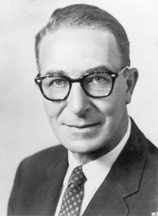
President Truman was eligible for another term (his first term as President came from the death of Franklin D. Roosevelt), and he was on the primary ballots, but he was low in the polls. Estes Kefauver, Senator from Tennessee, was the front runner. He had led an investigation into organized crime and its control of political machines, which turned out to be mostly Democratic Party political machines. He vowed to clean up America.
Truman could not let that happen. While most historians have been unable to prove that Truman was personally corrupt, it is hard to argue with his lifetime tendency to run with corrupt men, starting with the Pendergast Machine in his native Missouri, and ending with men he appointed to high office when the President's appointed cronies, among them Donald Dawson, Merle Young, and William Boyle Jr., were caught demanding bribes to facilitate government grants to businesses. Truman did not think Kefauver was cleaning up the Democratic Party, he thought Kefauver was destroying it.
Truman needed a white knight, someone with a good reputation, but who would let the Democrats continue corruption as usual. After considerable effort he convinced the Governor of Illinois, Adlai E. Stevenson, to run against Kefauver.
Stevenson's run may have been the model for Barack Obama's primary run in 2008. Adlai was articulate, a great speaker who could galvanize the Democrats' liberals and intellectuals. Meanwhile the party bosses, hand in hand with organized crime, were happy to get behind Stevenson, who was a true son of the Chicago political machine, no matter his surface gloss.
In the first primary, New Hampshire, Kefauver crushed Truman; Stevenson was not on the ballot. Eisenhower beat Taft 44,497 to 35,820, which is also a large margin of victory.
But Taft was not so easily put off. His father, William Howard Taft, had served both as President and as Chief Justice of the United States Supreme Court. Robert had first been elected to office in 1920 and had served in the U.S. Senate since 1939. He had led the conservative opposition to Roosevelt and Truman for almost two decades. He had a strong campaign organization left over from two prior runs for the nomination.
Robert Taft beat Eisenhower in the next Republican primary, Nebraska; then in Wisconsin. In Illinois Eisenhower came in third. But "Ike" won the New Jersey and Pennsylvania primaries. Earl Warren won California and Taft won South Dakota, the last 2 primaries. With delegates from states not holding primaries Taft was way ahead. He had 588 committed delegates, with only 604 needed to get the nomination. He just needed 16 more uncommitted delegates to win.
Meanwhile Kefauver won every state Democratic primary except Minnesota (won by Hubert Humphrey), Florida (Richard Russell) and West Virginia (which elected an unpledged delegation).
So who was elected President in 1952? Did the people elect Estes Kefauver or Robert Taft?
Trick question. Don't feel bad, few Americans can name all the Presidents. There were a lot of them, and many are now quite obscure.
There were two political coups in 1952, one in the Democratic Party and one in the Republican Party.
Back in 1952 African-Americans could not vote in the former Confederate states, the South (and were discouraged from voting in many other states as well). The Democratic Party, in the South, was the party of segregation, a white-people's party. There were few Republicans in the southern states, but they sent delegates to the Republican National Convention, convened on July 7 in Chicago, anyway. Keynotes were given by Joe McCarthy and General Douglas MacArthur. Then business was conducted.
Taft appeared to be able to win the nomination on the first ballot. He now had 607 committed delegates. But Thomas Dewey and other supporters of Eisenhower had other ideas. They challenged the credentials of the southern state delegates, most of whom supported Taft. Meanwhile polls showed Eisenhower would do better with the general public than Taft, the darling of conservatives. Back room deals were made in secret. Individual delegates began to desert Taft.
On the first ballot Eisenhower got 595 votes, Taft 500, Warren 81, Harold Stassen 20, and MacArthur 10. Before a second ballot could be held, the Minnesota delegation changed over to Ike, giving him the nomination. Taft, ever the team player, allowed a motion to make the nomination unanimous.
The Democrats also met in Chicago, about a week after the Republicans left. Adlai Stevenson had taken himself out of the race on April 16. Kefauver had the popularly elected delegates, but crooks ran the party in that era. The anybody-but-a-reformer crowd considered Vice President Alben Barkley, but labor union leaders refused to back him. Stevenson made a speech welcoming the convention, and by all accounts, it was a great speech, recapitulating the achievements of the New Deal. Soon after Stevenson allowed he would accept the nomination, if offered.
It took three ballots for organized crime to prevent Estes Kefauver from becoming President. Kefauver led Stevenson in the first ballot with 340 votes to Stevenson's 273, Richard Russell's 268, Averall Harriman's 123 and 1/2, and a scattering for others. In the second ballot Kefauver again led with 362.5 votes, Stevenson had 324.5, Russell 294, and Harriman 121. But on the third ballot some delegates (probably bribed) defected from Kefauver, and Harriman's switched to Stevenson in a block. So Stevenson was nominated on the third ballot with 617.5 votes, or 50.2% of the delegates.
The party bosses did let the American people (excepting southrern non-whites) vote in November of 1952. The American people went with the General, who was pretty close to the center of the political spectrum. To appease the right wing of the Republican Party, Richard Nixon was Ike's running mate and became the Vice President of the United States. Dwight David Eisenhower became the first Republican Party President of the United States since Herbert Hoover.


 by Sally Denton and Roger Morris. Also David Halberstam's
  .
.
